
FOUR FASHION (some text hidden) --NONE--
By Jonathan Crouch
Introductionword count: 86
The second generation DS 4 compact premium hatch deserved more recognition than it got. For us, this might be the most distinctive and potentially the most interesting car of its kind in this part of the market from the 2021-2025 period. There are sharp looks, a stand-out cabin - and there was the option of clever damping technology too. PHEV engine tech's there if you want it and all the powertrains are efficient. In short, there's lots to like if you don't mind the premium pricing.
Modelsword count: 17
5dr Family Hatchback (1.2 PureTech / 1.2 Hybrid / 1.6 petrol E-TENSE PHEV / 1.5 BlueHDi diesel)
Historyword count: 231
Back in 2021, the Stellantis Group's DS premium brand had yet to gain much traction in the UK. But wanted that to change, with this car, the second generation DS 4. A quick DS history to start with. The brand launched in stand-alone form in 2015, mostly re-badging sportier Citroens until it could launch its own design, the DS 7 Crossback SUV, in 2017. Since then, we've had the first generation DS 4 model, which sold between 2015 and 2019 and which almost nobody bought. Then the small but rather curious-looking DS 3 Crossback. Followed then by the even rarer DS 9 upper mid-sized saloon. Nothing though, to really get people talking. But this second generation DS 4 did. Surprisingly, DS decided not to make a slightly larger compact SUV than the DS 3 Crossback. Which meant that this DS 4, though really a compact premium hatch taking on the Audi A3 Sportback, the BMW 1 Series and the Mercedes A-Class, had also to try and appeal to people who might have wanted a compact premium SUV like, say, an Audi Q3, a BMW X1 or a Mercedes GLA. That was a lot to ask and this model struggled to deliver. A 1.2 Hybrid (non-plug-in) version arrived in 2024. The DS 4 model was updated in 2025 and re-named the DS No4. Here, we look at the 2021-2025-era DS 4 models.
What You Getword count: 506
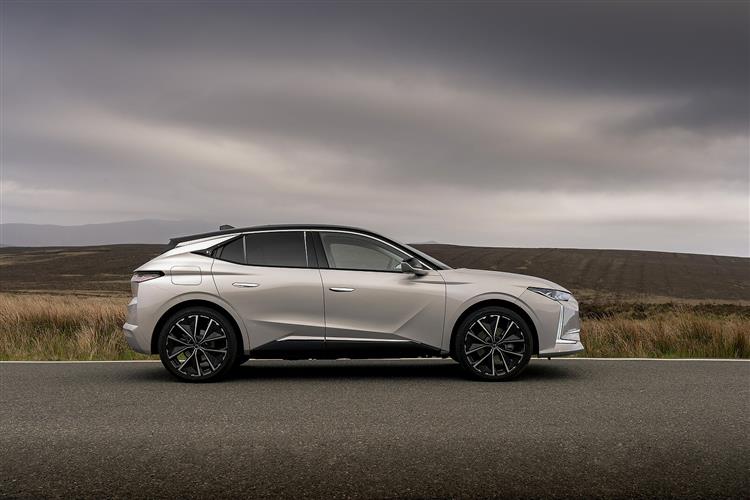
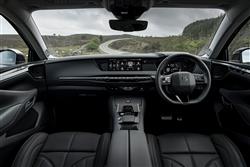
DS hopes that the look of this car will sell it to you - and for sure it'll stand out in the supermarket car park. At first glance, you might be undecided as to whether this is a premium compact hatch or a premium small SUV - and that's entirely intentional because it can be both. The conventional version is supposed to look luxuriously premium. Or sporty if you opt for the 'Performance Line'-trimmed variants, designated by a gloss black front grille and black upper window surrounds. The alternative is the SUV-inspired 'Cross' version, which gets crossover cues like front and rear skid plates and roof bars, also gaining side skirts and black bumpers. Get comfortable in the so-called 'Digital Seamless Cockpit', it's all very plush, twinkling displays seem to surround you and there's a level of stylised design that DS hoped would ensure this model's admission to the premium segment. Your passengers may well gaze around in wonder at what DS calls 'Clous de Paris guilloche' finishing, complemented by cabin materials that, depending on variant, can include pearl-stitched leather, Alcantara, forged carbon and wood. The DS 4's 'fully digital' cabin is normally made up of no fewer than three displays. There's a 10-inch screen replacing conventional dials in the instrument cluster. And an HD infotainment display of the same size in the centre of the dash for media and navigation. This is controlled by a third 5-inch screen further down the centre stack known as the 'DS Smart Touch'. If that's not enough screen tech for you, it was also possible for original owners to specify Night Vision: and the segment's cleverest head-up display, claimed to be closer to augmented reality than any other system. Another interesting touch was the lack of visible air vents; the main ventilation unit is integrated behind and strip of physical switches that sit just below the main control screen. The seats are particularly comfortable. And there's plenty of stowage space too. The swept-back roof line doesn't do much for rear seat access, but the aperture remains tall and wide enough for relatively easy access and for parents to lean in and strap down their offspring. Once you're inside at the rear, it's a big improvement on the dark, cramped coal hole that was the back seat of the first generation DS 4, a model so compromised at the back that rear folk couldn't even open their windows. There's none of that nonsense here, but even by the modest standards of the class, legroom will remain somewhat on the cramped side should there be someone of similar size seated ahead of you. Headroom's fine though - even with the optional sunroof fitted - and there's plenty of premium finishing to distract your attention if you're feeling a touch squashed. Raise the tailgate (which could be had in powered remote-opening form) and once you've negotiated the relatively high, impractically-covered loading lip, you'll be faced with a decently-sized 430-litre boot - though this total falls to 390-litres with the E-TENSE PHEV variant.
To see the full road test text contact us on 0330 0020 227
Pictures (high res disabled)
.jpg)
|
.jpg)
|
.jpg)
| |||
.jpg)
|
.jpg)
|
.jpg)
| |||
.jpg)
|
|
Scoring (subset of scores)
Category: Compact Family Cars
| Performance | |
| Handling | |
| Comfort | |
| Space | |
| Styling, Build, Value, Equipment, Depreciation, Handling, Insurance and Total scores are available with our full data feed. | |