
NAMING CONVENTION (some text hidden) --NONE--
By Jonathan Crouch
One of Volkswagen's most enduring MPV nameplates returns. Jonathan Crouch takes a look at the new-era Caravelle.
Ten Second Reviewword count: 69
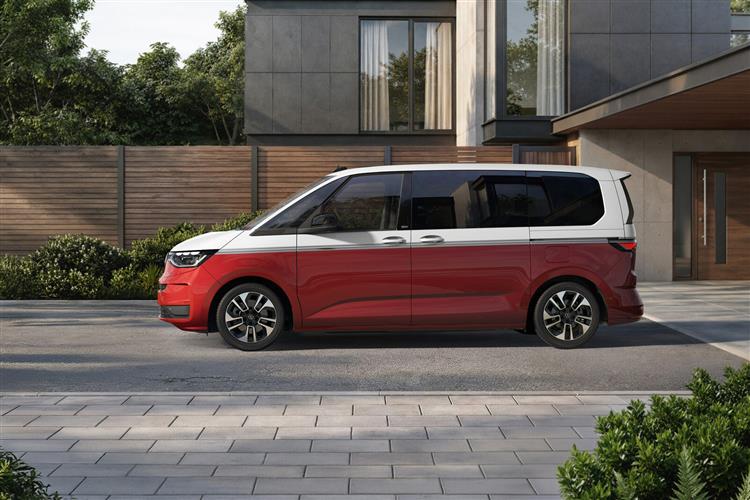
What was the Volkswagen Multivan is now the brand's new-era Caravelle. This is still the same T7-generation Multivan design, but gains a sharper look and improved infotainment to go with its name change. As before, this seven-seat People Carrier is rare in the segment for large MPVs because it's not fundamentally based on the underpinnings of a van. Yet it manages to be supremely spacious and flexible for families.
Backgroundword count: 184
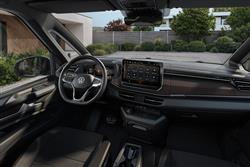
The Caravelle model line goes all the way back to 1979, when it was used to designate a plusher, more car-like People Carrying version of the third generation T3 Transporter van. Over the next forty years, the Caravelle was equalled only by the Mercedes V-Class at the quality end of the segment for large MPVs. But when the T6-era version reached the end of its production run in 2021, Volkswagen rather inexplicably dropped the 'Caravelle' nameplate, badging the replacement T7-era design the 'Multivan', an ironic decision given that unlike its predecessors, the T7 design wasn't based on a van. This, Wolfsburg now admits, was a mistake, and in an era where the company is placing much faith in long-running model nameplates, decided to use the Multivan's mid-term update in Summer 2026 to rename this T7 design the 'Caravelle', as it should have done all along. Add in the more car-like front end and cabin introduced as part of this facelift and Volkswagen might be more easily able to persuade buyers that this isn't merely a plushed-up van with windows. Let's take a closer look.
Driving Experienceword count: 294
Unlike the old T6-era Caravelle, which (like its predecessors) shared its engineering with the brand's Transporter van, this seven-seat model gets the extended version of Volkswagen's familiar MQB platform, as used by larger group SUVs like the Volkswagen Tiguan and the Skoda Kodiaq. Some of Volkswagen's most popular engines feature here. Most Caravelle customers will choose the 2.0-litre 150PS 2.0-litre diesel. But if you can stretch to it, a good alternative is the 245PS eHybrid 4Motion AWD plug-in petrol model, which has a battery range of up to 91 miles from its 19.7kWh battery - enough for many school runs and shopping trips. An extra 100kg of weight means this PHEV variant isn't especially quick, but can be driven electrically at up to 80mph. The conventional petrol alternative is the 204PS 2.0-litre TSI version, but that isn't going to be cheap to run. Especially if you take advantage of the 2,000kg towing capacity (also common to the diesel), which falls to 1,600kg with the eHybrid. Around town and on narrow country roads, the Caravelle feels the prodigious size that it is, but as advertised, it's much more car-like than the old T6-era Caravelle. Potholes and speed humps no longer send tremors through the body structure because that chassis is now so much stiffer. Plus the suspension set-up's been optimised and is available with extra cost Dynamic Chassis Control adaptive damping if you want it. Roll through the bends has been reduced by about 25% and the steering is far more direct, though doesn't have much feedback. Should you be running late for the school run, you can actually even drive with a bit of enthusiasm and you sit a little further back than in the old Caravelle, in a driving position that's less upright.
To see the full road test text contact us on 0330 0020 227
Pictures (high res disabled)
.jpg)
|
.jpg)
|
.jpg)
| |||
.jpg)
|
.jpg)
|
|
Statistics (subset of data only)
Min |
Max |
|
Price: |
£50,683.00 (At 18 Jun 2026, est) |
£67,840.00 (At 18 Jun 2026, est) |
CO2 (g/km): |
63 (1.5 eHybrid) |
170 (2.0 TDI) |
Max Speed (mph): |
118 (2.0 TDI) |
124 (1.5 eHybrid) |
0-62 mph (s): |
11.6 (2.0 TDI) |
8.9 (1.5 eHybrid) |
Electric WLTP-Rated Driving Range (miles): |
91 |
|
Combined Mpg: |
43.5 (2.0 TDI) |
104.8 (1.5 eHybrid) |
Length (mm): |
4973 |
5173 |
Width (mm): |
1941 |
|
Height (mm): |
1907 |
|
... and 2 other stats available | ||
Scoring (subset of scores)
Category: MPV People Carriers
| Performance | |
| Handling | |
| Comfort | |
| Space | |
| Styling, Build, Value, Equipment, Depreciation, Handling, Insurance and Total scores are available with our full data feed. | |