Nissan X-Trail - ABC Leasing
X HITS THE SPOT?(some text hidden)
By Jonathan Crouch
Ten Second Review word count: 48
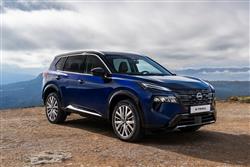
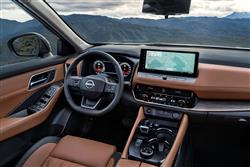
Nissan's fourth generation X-Trail has now evolved into a more polished contender in the segment for family-sized SUVs offering up to seven seats. The cabin is nicer, the looks are sharper and there's efficient e-POWER semi-electric petrol propulsion beneath the bonnet. Time to take this contender more seriously.
Background word count: 212
Lots of brands claim to offer the world's best selling SUV and Nissan is one of them, the brand's X-Trail angling for that title and now in its fourth generation. If you include the US market (where this car is badged as the 'Rogue'), over three-quarters of a million X-Trails are currently being sold globally every year. An awful lot of family buyers, it seems, like the idea of a mid-sized Qashqai-class crossover, but need one with a little more space and the option of a third seating row. Seven-seat functionality hasn't always been an X-Trail trait. Earlier first and second generation versions in this model line (launched respectively in 2000 and 2007) didn't offer it, but sales took off when the third generation 'T32'-series version was introduced in 2013 with three seating rows. That model was updated in 2017 and it kick started demand for mid-sized SUVs that could seat seven. This current fifth generation 'T33'-series X-Trail, launched here in Autumn 2022, was introduced to rival SUVs like Peugeot's 5008 and the Skoda Kodiaq. But new competitors launched since, like the Volkswagen Tayron and a whole series of Chinese brand models, meant the need for a package of updates in Spring 2026, creating the car we're going to look at here.
Driving Experience word count: 295
You now have to have your X-Trail with Nissan's clever ePower series-hybrid system - the brand is no longer offering the previous 1.5-litre mild hybrid petrol unit on this car. And of course diesel has long-since been banished for X-Trail customers. Still, the ePower set-up is a good alternative. You can't plug any Nissan ePower model in, but it's extremely clever, hence the brand's claim that this is a battery car with a 460 mile range and 5 minute recharging. If you're not familiar with the company's ePower technology, we'll tell you that here, the engine acts only as a generator, drive delivered instead by an electric motor - or two, depending on your choice of models. The front-driven version has its motor on the front axle and puts out 204PS. The AWD variant we tried adds a further electric motor on the rear axle, upping output to 213PS, offering a 0-62mph potential of 7.0 seconds and delivering permanent four-wheel drive. This e-4ORCE tech is able to respond to grip changes by altering front-to-rear torque distribution in less than a thousandth of a second. Plus with the extra rear motor comes a high-tech brake vectoring and brake regeneration set-up, which is supposed to deliver a more stable ride. Ride quality still isn't exemplary though, over potholes and poor surfaces - and gets worse if you choose a top variant with the largest 20-inch wheel size. But higher-speed undulations are coped with better, making this a comfortable family cruiser; particularly in this e-4ORCE form, which pairs its extra rear motor with a high-tech brake vectoring and brake regeneration set-up, which is supposed to deliver a more stable ride. Avoid stressing the little engine, keeping it in its sweet spot and you'll find that refinement's excellent too.
Pictures (High res disabled)
.jpg)
.jpg)
.jpg)
.jpg)
.jpg)
.jpg)
.jpg)
Scoring
Category: Compact Car
| Performance | |
| Handling | |
| Comfort | |
| Space | |
| Styling | |
| Build | |
| Value | |
| Equipment | |
| Economy | 80% |
| Depreciation | 60% |
| Insurance | 70% |
| Total | 68% |
Mobile
Narrow
Narrower
Normal
Wide