
ELECTRIC DREAMS (some text hidden) --NONE--
By Jonathan Crouch
The now much-improved Mercedes GLE large SUV can be had in a very sensible form indeed. Jonathan Crouch takes a look at the 450 e Plug-in Hybrid variant.
Ten Second Reviewword count: 50
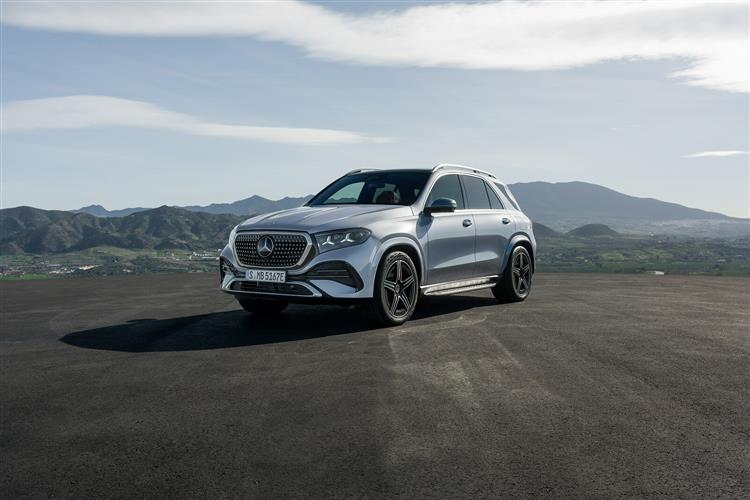
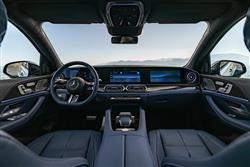
The improved version of the W167-era Mercedes GLE switches from four to six cylinders for its Plug-in Hybrid drivetrain, now petrol-powered only. Creating the GLE 450 e model we look at here. Other changes made as part of this GLE update include smarter looks and a rejuvenated cabin. Sounds promising.
Backgroundword count: 120
Launched in 2019, the W167-era version of Mercedes' GLE took a big step forward and was further improved four years later, prior to the further Spring 2026 facelift we look at here. Could a large SUV like this really ever make sense for someone with one eye on the environment? Someone wanting a combination of performance and low running costs? Surprisingly, the answer is yes, or at least it is in the case of the variant we're looking at here, the clever GLE 450 e PHEV plug-in petrol-/electric model. It specifically takes on plug-in versions of BMW's X5, Porsche's Cayenne and Volvo's XC90 - and looks better set to do that in this updated form. Let's take a closer look.
Engines and Tech Specword count: 335
A couple of things worth pointing out at the beginning here. First, this is a petrol-powered PHEV; previous to the Spring 2026 update, this W167-era GLE was also available (rather uniquely) in diesel PHEV form. Secondly, as part of this further GLE update, the core engine in use in the single 450 e PHEV model available has six rather than the previous four cylinders. Specifically, the main drive engine as part of this package is now the brand's updated M256 Evo' 3.0-litre turbo petrol straight six unit, which has gained a new cylinder head, larger intakes and new exhaust ports. A little surprisingly though, the PHEV system's 31.2kWh battery is basically the same, so the EV range figure isn't much different, rated at up to 65 miles. Total 450 e engine output is 443hp, which combines with a rear-mounted 178hp electric motor (47hp more powerful than the one in the previous model) for a total potent 569hp output, with 0-62mph achievable in just 4.5s. That's a big jump in output from the previous four cylinder GLE 400 e PHEV. The transmission here continues to be the same nine-speed 9G-TRONIC automatic gearbox used previously, which in this GLE works as seamlessly as it does in the many other Mercedes models in which we've tried it. As with the previous version of this car, Mercedes offers a clever optional 48V E-ACTIVE BODY CONTROL system which combines with the optional AIRMATIC air suspension. With this, the spring and damping forces can be individually controlled at each wheel. This means that the system not only counteracts body roll, but also pitching and squat. Improvements made as part of this update see this set-up (via an online connection) able to store the location of big bumps and potholes - either ones you've encountered or surfaces encountered by other Mercedes models equipped with the system. The result it that if you then come across the bit of road in question, the E-ACTIVE system will prepare the suspension for that bump: clever.
To see the full road test text contact us on 0330 0020 227
Pictures (high res disabled)
.jpg)
|
.jpg)
|
.jpg)
| |||
.jpg)
|
.jpg)
|
.jpg)
| |||
.jpg)
|
.jpg)
|
.jpg)
| |||
|
Statistics (subset of data only)
Min |
Max |
|
Price: |
£80,000.00 (Estimated At 24 Apr 2026) |
£95,000.00 (Estimated At 24 Apr 2026) |
CO2 (g/km): |
72 (SUV) |
|
Max Speed (mph): |
130 |
|
0-62 mph (s): |
4.5 |
|
Length (mm): |
4926 |
|
Width (mm): |
2015 |
|
Height (mm): |
1797 |
|
Boot Capacity (l): |
490 |
|